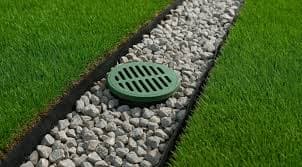
French Drain Installation: When Your Yard Needs One
The Problem With Standing Water
If water pools in your yard after a moderate rain — and stays there for hours or days — you have a drainage problem. It's one of the most common property issues across North Georgia, thanks to our clay-heavy soil that doesn't absorb water quickly and our hilly terrain that channels runoff in unpredictable ways.
Standing water isn't just an eyesore. It drowns grass roots, creates breeding grounds for mosquitoes, erodes topsoil, and can eventually seep toward your foundation. Left unchecked, a drainage issue becomes a structural issue.
What Is a French Drain?
A French drain is a gravel-filled trench with a perforated pipe at the bottom. It intercepts groundwater and surface water, then redirects it away from problem areas — typically to a lower point on your property, a storm drain, or a dry well. Despite the name, it has nothing to do with France. It's named after Henry French, a Massachusetts farmer who popularized the technique in the 1800s.
The concept is simple, but the execution matters. A poorly installed French drain can clog within a year or redirect water to a new problem area. Proper grading, pipe selection, and fabric wrapping are what separate a drain that works for a decade from one that fails in a season.
Signs You Need a French Drain
Not every wet yard needs a French drain. Here are the specific signs that point toward this solution:
- Water pools in the same spot after every rain
- Your yard stays soggy for 24+ hours after rain stops
- You see erosion channels forming in your lawn or garden beds
- Water is seeping into your basement, crawlspace, or garage
- Your downspouts discharge into areas that flood
How We Install French Drains
Every French drain project starts with reading the land. We walk your property, identify where water enters, where it collects, and where we can safely direct it. Then we trench, lay landscape fabric, add the perforated pipe at the correct grade, backfill with washed gravel, and restore the surface. Most residential French drains take 1-2 days to install.
Cost Considerations
French drain costs depend on length, depth, and site conditions. A 30-foot run through an open yard is straightforward. A 60-foot run that crosses a patio, navigates tree roots, and ties into a municipal storm drain is more involved. We provide clear estimates with no surprises — what we quote is what you pay.
The Bottom Line
If water is winning the battle in your yard, a French drain is often the most cost-effective permanent solution. It's not glamorous work, but it protects everything else you invest in — your lawn, your landscaping, your hardscaping, and your home's foundation.
READY TO GET STARTED?
Whether you need lawn care, hardscaping, or a full property transformation — we're here to help.
GET YOUR FREE ESTIMATE